Plan a guided visit from Paris ↗ From A$300

A visitor's field guide

The Beaches, and the Men Who Landed Here

The Normandy Landings · 6 June 1944
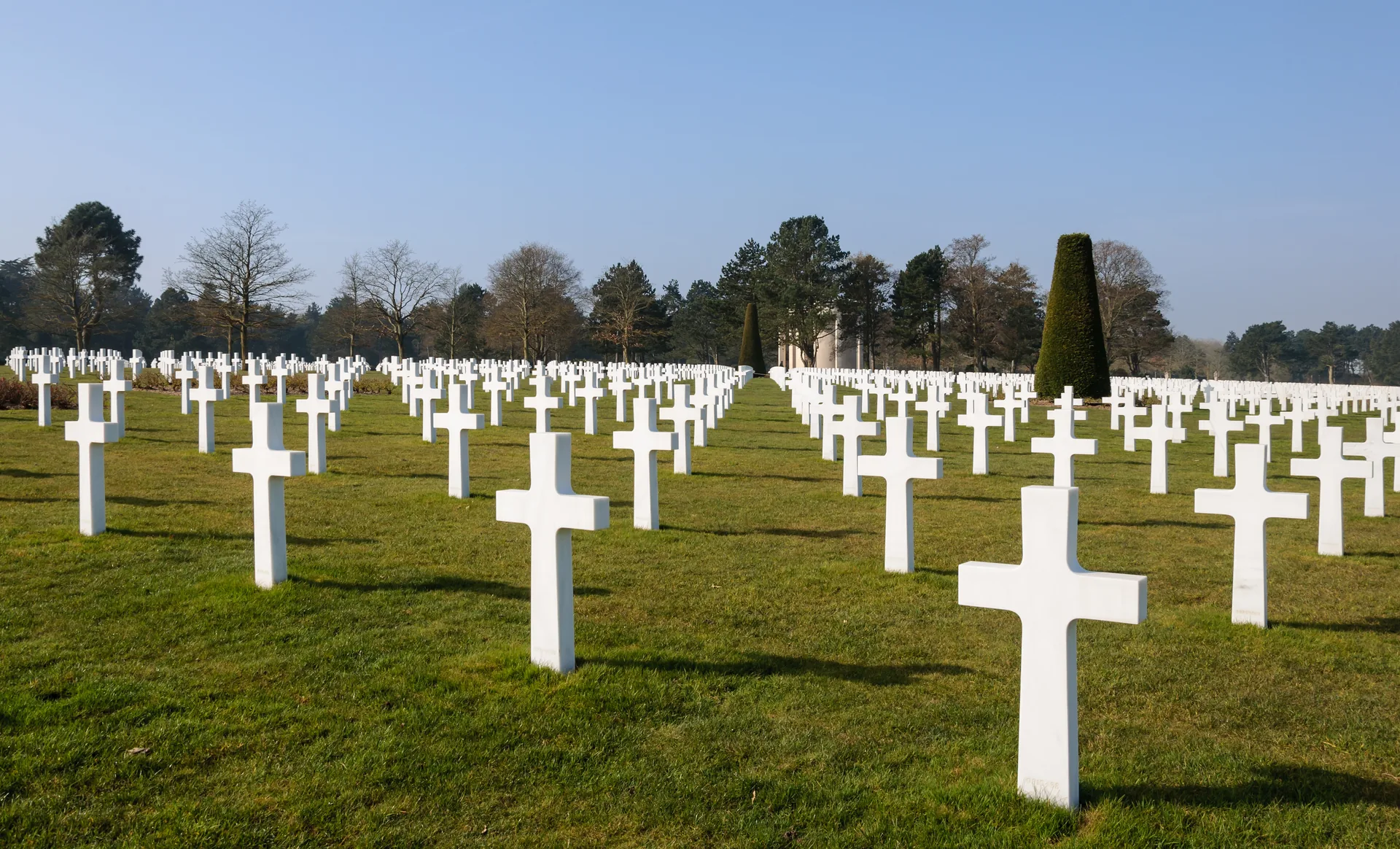
Rows of white marble headstones at the Normandy American Cemetery above Omaha Beach, Colleville-sur-Mer
Photograph by Myrabella

Before dawn on 6 June 1944, the largest seaborne invasion in history crossed the English Channel. Some 156,000 Allied troops — American, British and Canadian — landed across five beaches code-named, from west to east, Utah, Omaha, Gold, Juno and Sword, carried by an armada of around 5,000 vessels. It was the opening of the campaign to free Western Europe, and on this stretch of Norman coast the cost of that first day was paid in full.

A day trip from Paris concentrates on the American sector, in the west, where the fighting on Omaha was heaviest and where the great memorials now stand. Here the US 1st and 29th Divisions came ashore at Omaha under withering fire — roughly 2,400 American casualties in a single morning on what soldiers came to call 'Bloody Omaha' — while, on the cliffs to the west, Rangers scaled Pointe du Hoc. Above the beach today lies the Normandy American Cemetery, the first American cemetery on European soil in the war.

What is striking now is how peaceful it all looks. Omaha is a wide, calm, pretty beach; Pointe du Hoc is a field of grassed-over craters; the cemetery is silent rows of marble. The events of that morning are not visible in the landscape — they live in what you know as you stand there. That is why this is a visit best made with a guide, and made slowly: the sand and the cliffs and the headstones carry their weight only when you understand what took place on them.

The assault, west to east

Five beaches

I

Utah

United States · 4th Infantry

Sometimes reached

II

Omaha

United States · 1st & 29th

Day-trip core

III

Gold

United Kingdom · 50th

Via Arromanches

IV

Juno

Canada · 3rd Infantry

Rarely in a day

V

Sword

United Kingdom · 3rd

Rarely in a day

A day trip from Paris concentrates on the American sector, in the west. The Canadian and British beaches to the east are usually beyond a single day — the most common disappointment, and worth planning around.

What a day from Paris covers

What a day from Paris covers

The single most important thing to understand before booking: a day trip from Paris shows you the American sector well, but it cannot show you everything. Be clear about which visit you're taking.

What you'll see

The American sector, properly

A standard Paris day tour covers the American-sector sites well: Pointe du Hoc, the Normandy American Cemetery and Omaha Beach, very often with Longues-sur-Mer and/or Arromanches, and sometimes a museum or Utah Beach. That cluster — the cliffs, the cemetery, the beach and the artificial harbour — is the emotional and historical core of the landings, and a full, guided day does it justice.

What one day can't reach

The British and Canadian beaches

What a single day from Paris generally cannot include are the eastern beaches: Juno (Canadian) and Sword (British) are usually out of reach, and even Gold beyond Arromanches is a stretch. If seeing the Juno Beach Centre or the British sector specifically matters to you, choose a tour that names them, or base yourself in Normandy for a night or two. Assuming a standard Paris tour covers all five beaches is the most common disappointment — so plan around the American sector.

In the order of the day

The places you'll stand before

'Bloody Omaha'

Plate I

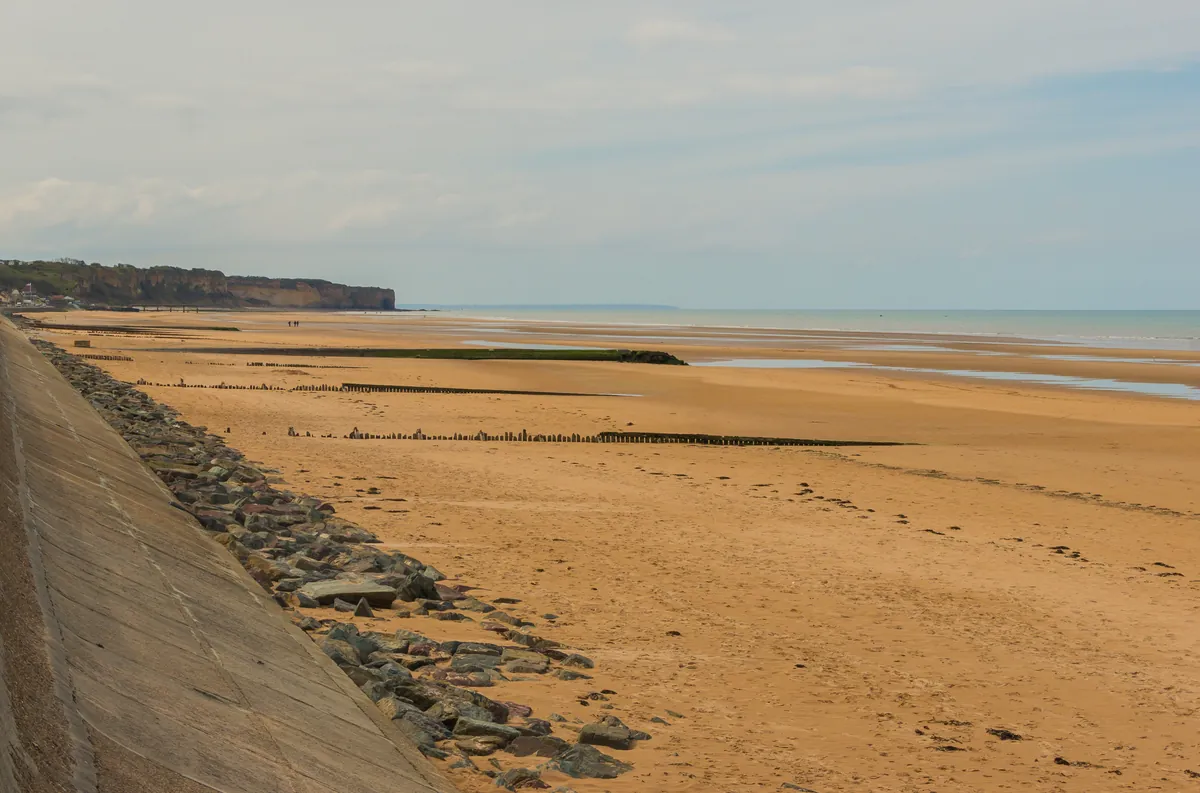
Omaha Beach

'Bloody Omaha'

The costliest of the five beaches. The US 1st and 29th Infantry Divisions landed here into concentrated fire; Company A of the 116th Infantry lost nearly nine in ten men in the first waves, and by day's end there were around 2,400 American casualties. Today it is a long, quiet expanse of sand where, at Saint-Laurent-sur-Mer, Anilore Banon's stainless-steel sculpture 'Les Braves' rises from the beach — three great wings honouring the men who landed here.

The cliff assault

Plate II

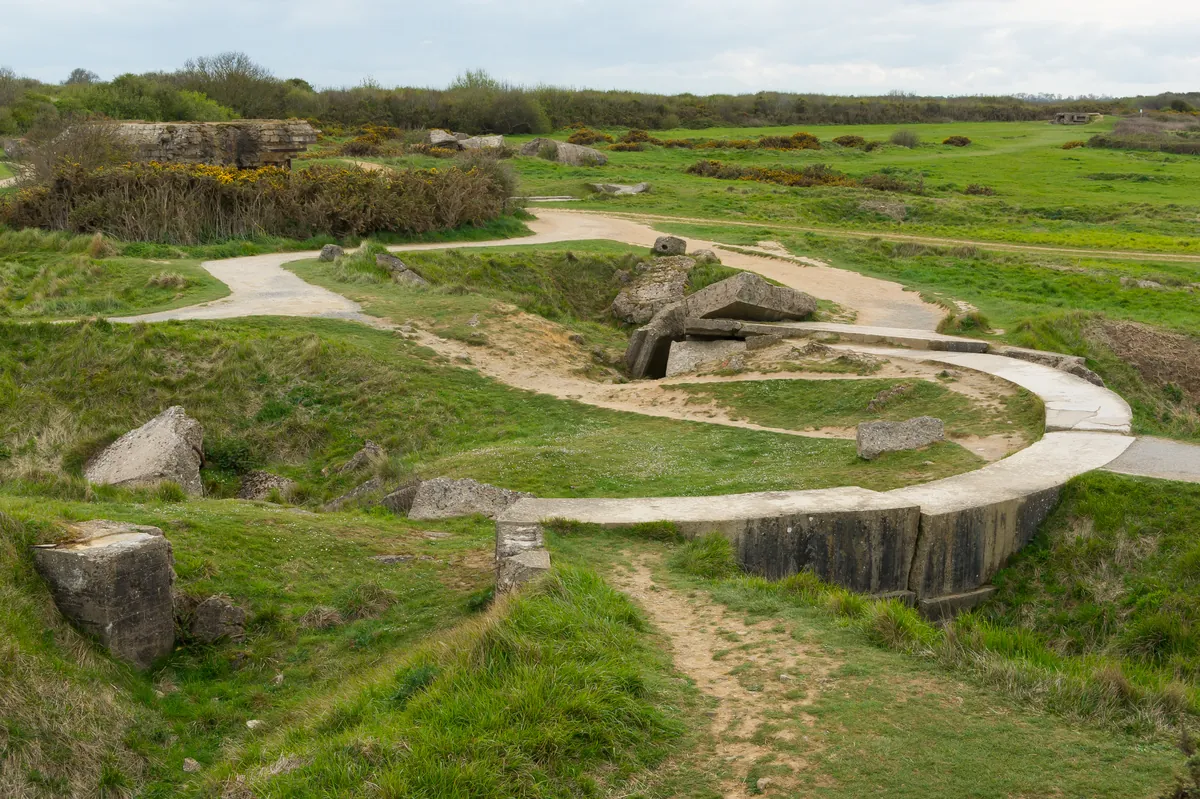
Pointe du Hoc

The cliff assault

Between Utah and Omaha, a German battery sat atop near-vertical cliffs of about thirty metres. On D-Day some 225 US Rangers under Lt Col James Rudder scaled those cliffs under fire to silence guns that could range both beaches; by the time relief arrived two days later, only around 90 were still fit to fight. The site is preserved almost as it was left — a moonscape of deep bomb craters and shattered concrete bunkers you can walk among and into. Of all the stops, the ground itself tells the story most plainly here.

9,387 headstones above the sea

Plate III

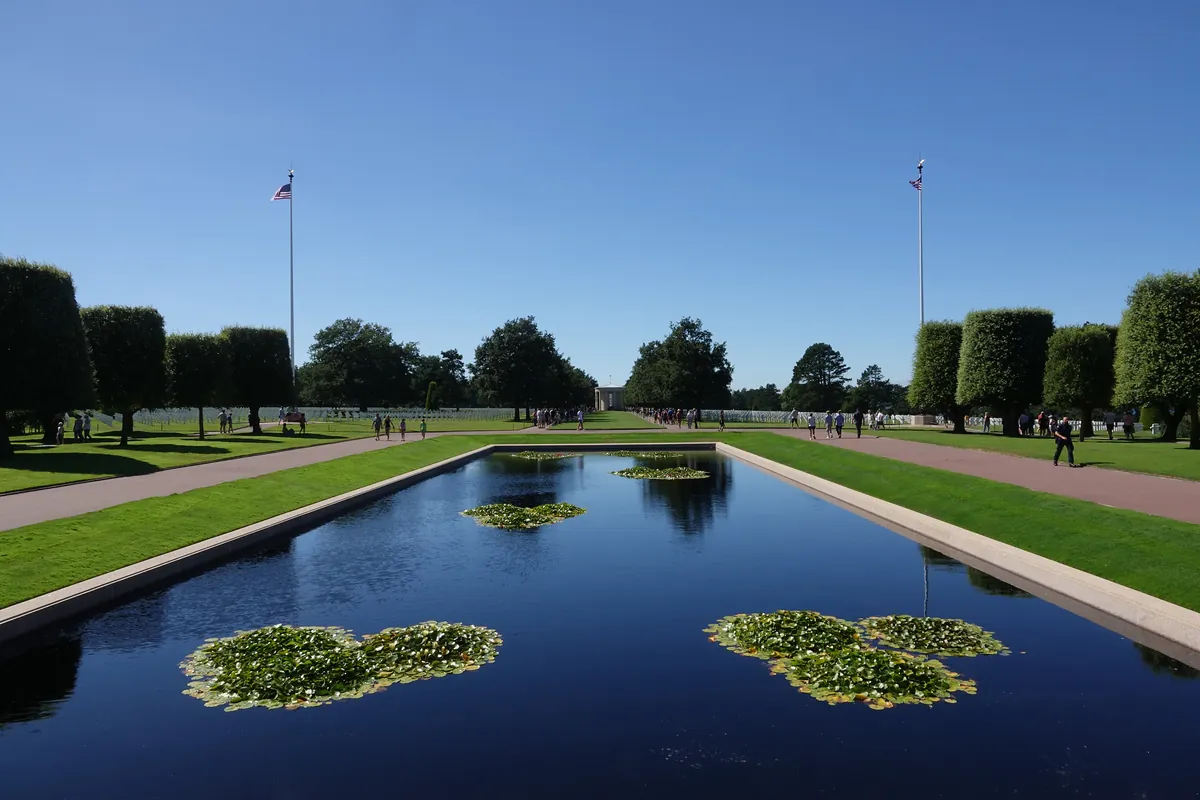
The American Cemetery

9,387 headstones above the sea

On a 172-acre bluff directly above Omaha stand 9,387 white marble headstones — Latin crosses and Stars of David — all facing west toward the United States, above the beach where many of these men died. A Walls of the Missing commemorate a further 1,557 whose remains were never recovered or identified; a rosette beside a name marks those since found. There is a memorial, a chapel and a reflecting pool. It is an active cemetery, run by the American Battle Monuments Commission, free to enter and visited in quiet respect.

The harbour they brought with them

Plate IV

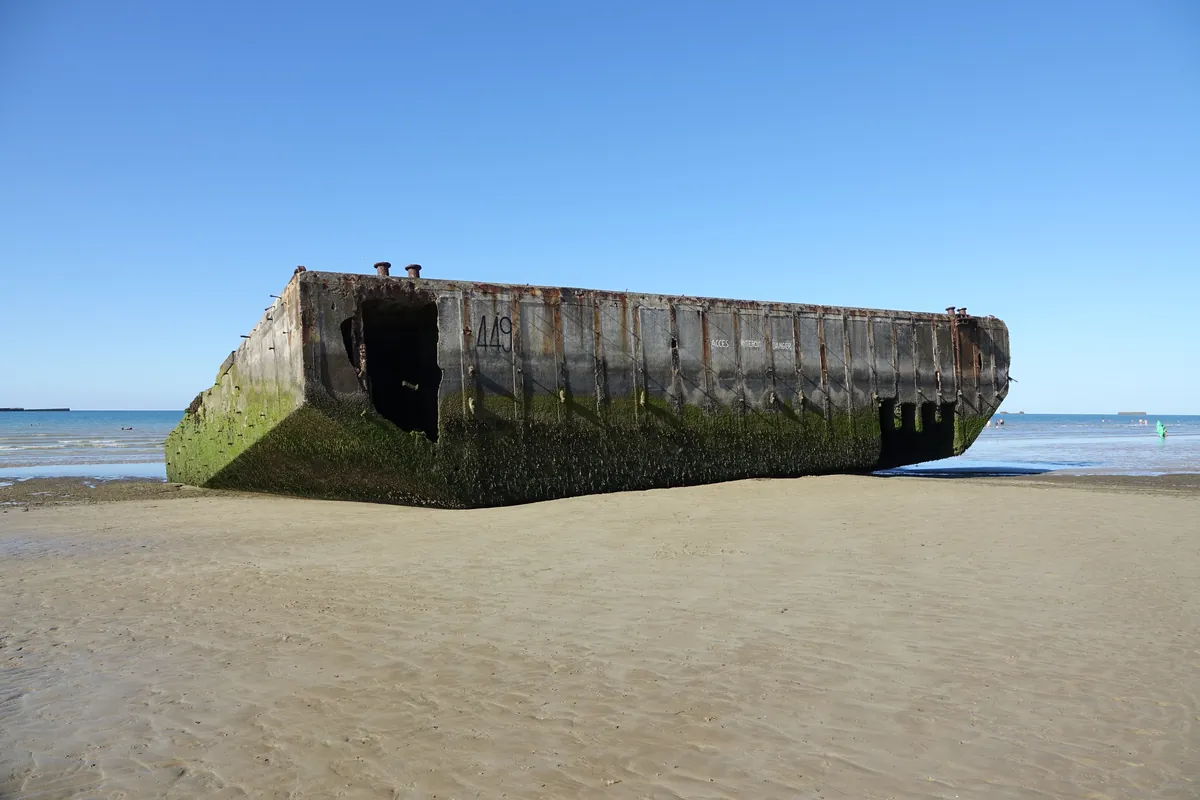
Arromanches

The harbour they brought with them

Having captured no port, the Allies towed a prefabricated harbour across the Channel and assembled it off Arromanches in the British sector — around 115 six-storey concrete 'Phoenix' caissons, named 'Port Winston' after Churchill. In the months after D-Day it landed some 2.5 million men and 4 million tons of supplies. The caissons are still there, rusting on the sand and offshore, slowly eroding; at low tide you can walk out to one. Many day tours include a stop here.

Plate V

Longues-sur-Mer

The guns still in place

Between Omaha and Arromanches stands a near-intact Atlantic Wall coastal battery: four 152mm naval guns in their concrete casemates. It is the only battery in Normandy that still holds its original guns, pointing out to the Channel as they did in 1944 — a rare chance to see the German defences exactly where they stood. Freely accessible, it is often included on the route.

Plate VI

A museum

The wider story

Many tours include time at a museum to set the sites in context — most often the Mémorial de Caen, the largest Second World War museum in France, which traces the war from its origins through the Battle of Normandy, or a smaller museum near Omaha such as the Overlord Museum. Some tours skip a museum to spend longer at the beaches; which you'd prefer is worth checking before you book.

Is a day trip from Paris right for you?

Planning your visit

The beaches are a serious distance from Paris, and the practicalities are the honest case for booking a guided day rather than attempting it alone.

The distance is realParis to the D-Day coast is around 250 to 280 kilometres, roughly two and a half to three hours each way. A day trip is therefore a long day — commonly 12 to 15 hours door to door — and that's simply the nature of it. If you'd rather not spend so long travelling, staying a night in Bayeux and visiting over two days is the gentler alternative.
No transport between the sitesThe sites are spread across more than thirty kilometres of coast, and there is no useful public transport linking Pointe du Hoc, the cemetery, Omaha and Arromanches. You can take a train to Caen or Bayeux in about two hours, but you would then still need a car or a local tour to reach the beaches — which is why a car-free, self-guided day from Paris is impractical.
A guide makes the meaningBecause the sites look so peaceful today, a knowledgeable guide is the difference between seeing a nice beach and understanding what happened on it. Reviews of the best tours single out the guides again and again. For most visitors, a guided day isn't an upsell — it's what turns quiet ground into a comprehensible account of 6 June.
Booking, plainlyTours run daily year-round and fill through the summer, so it's sensible to reserve a seat ahead; most offer free cancellation up to 24 hours before, and reserve-now-pay-later. That's the practical extent of the urgency — the sites are free and always open to the public, so booking early is about securing the day that suits you, not about missing out.
Coach (small-group)MinibusPrivate
Group sizeLarger coach groupAround 8 peopleYour party only
CostLowestMidHighest
Pace & routeSet itinerarySet, more personalFlexible; can add Utah
GuideShared guideMore guide attentionYour own guide
Best forValue and the core sitesA more intimate dayTailoring the route or adding Mont-Saint-Michel
From A$300
★ 4.6 · 589 verified reviews · GetYourGuide
Plan a guided visit from Paris ↗

Live availability and pricing from GetYourGuide, shown in your own currency.

See all Normandy D-Day day trips ↗

before you go

Visiting the D-Day beaches

Is Normandy doable as a day trip from Paris?

Yes. It is a long day — around 12 to 15 hours, with two and a half to three hours' travel each way — but a very common and rewarding one, and a guided tour makes the single-day version realistic. If you can spare a night in Bayeux, a two-day visit is more relaxed and lets you see more; but for a traveller based in Paris with one day, a guided trip to the American sector is a well-trodden and worthwhile choice.

Which beaches and sites do the tours actually cover?

Almost all Paris day tours focus on the American sector: Pointe du Hoc, the Normandy American Cemetery and Omaha Beach, very often with Longues-sur-Mer and/or Arromanches, and sometimes a museum or Utah Beach. What a single day from Paris generally cannot include are the Canadian (Juno) and British (Sword) beaches to the east. If those matter to you, choose a tour that names them or base yourself in Normandy.

Is a guide really worth it?

For most people, yes — arguably it's essential. The beaches look utterly peaceful today, and the meaning of what happened is in the narration, not the view. A knowledgeable guide turns a quiet stretch of sand and a field of craters into a clear, moving account of 6 June 1944, and handles the logistics of moving between sites that have no public transport linking them. Reviews of the best tours single out their guides again and again.

How long do you spend at the American Cemetery, and how should I behave there?

Usually around 45 minutes to an hour and a half — enough to walk the rows of headstones, the memorial and the overlook above Omaha. It is an active war cemetery run by the American Battle Monuments Commission, and free to enter. Dress and behave respectfully, keep quiet near the graves, and follow the posted etiquette; photography is generally allowed but be considerate of others who have come to remember.

Can I visit without a car, and how far ahead should I book?

A car-free day from Paris is impractical: you can train to Caen or Bayeux in about two hours, but there is no public transport between the beaches themselves, so you'd still need a car or a local tour. That's why a guided day trip is the sensible choice for most visitors. Tours run daily year-round and fill through the summer, so it's worth reserving ahead — most offer free cancellation up to 24 hours before, so booking early simply secures the day that suits you.